

SEO by HighSoftware99.com: Does It Really Work for Rankings?
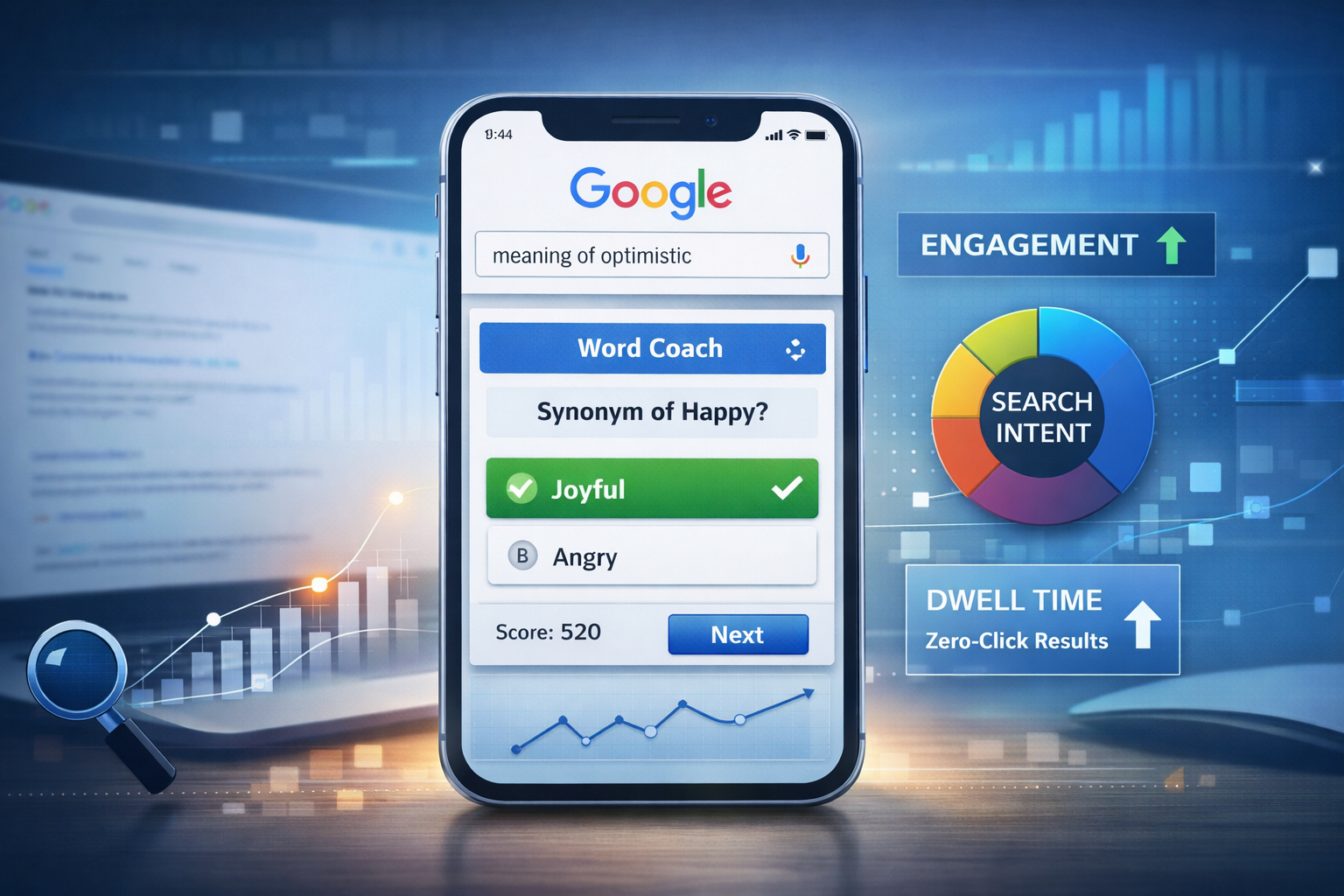
If you’ve ever searched for vocabulary meanings on mobile, you may have encountered Google Word Coach — a gamified quiz feature built directly into Google’s search results. While many users see Google Word Coach as simply a vocabulary tool, from a digital marketing perspective, Google Word Coach reveals something much more powerful: how Google understands and responds to search intent.
In this article, we’ll explore what Google Word Coach is, how Google Word Coach works, and what businesses can learn from Google Word Coach about search intent, engagement, and SEO strategy.
Google Word Coach is an interactive vocabulary quiz feature launched by Google to help users improve their English language skills. Google Word Coach appears directly in search results when users look up word meanings, synonyms, or translations — especially on mobile devices.
Instead of sending users to an external website, Google Word Coach keeps users within Google’s ecosystem by offering multiple-choice vocabulary questions. The more users engage with Google Word Coach, the longer they stay within search — increasing dwell time and interaction.
Google Word Coach wasn’t built just as a vocabulary tool — it’s a smart move in Google’s larger mission to make search more interactive, engaging, and self-sufficient.
Google Word Coach wasn’t built just as a vocabulary tool — it’s a smart move in Google’s larger mission to make search more interactive, engaging, and self-sufficient.
Instead of simply showing results and sending users away, Google is now focused on keeping users inside its ecosystem while delivering instant value.
Here’s what Google Word Coach is really designed to achieve:
Instead of just reading a definition and leaving, users now interact, click, and participate. This shift from passive to active engagement sends stronger user signals to Google.
Google Word Coach was initially launched in regions where users frequently search in English but may not be fluent. By embedding a learning tool directly in search, Google removes barriers and improves accessibility.
Every quiz answered means more time spent on Google. These micro-interactions increase dwell time and strengthen Google’s own engagement metrics — without relying on external websites.
Google is no longer just a search engine — it’s becoming an answer engine. Features like Google Word Coach show how search is evolving into an interactive, real-time experience within the SERP itself.
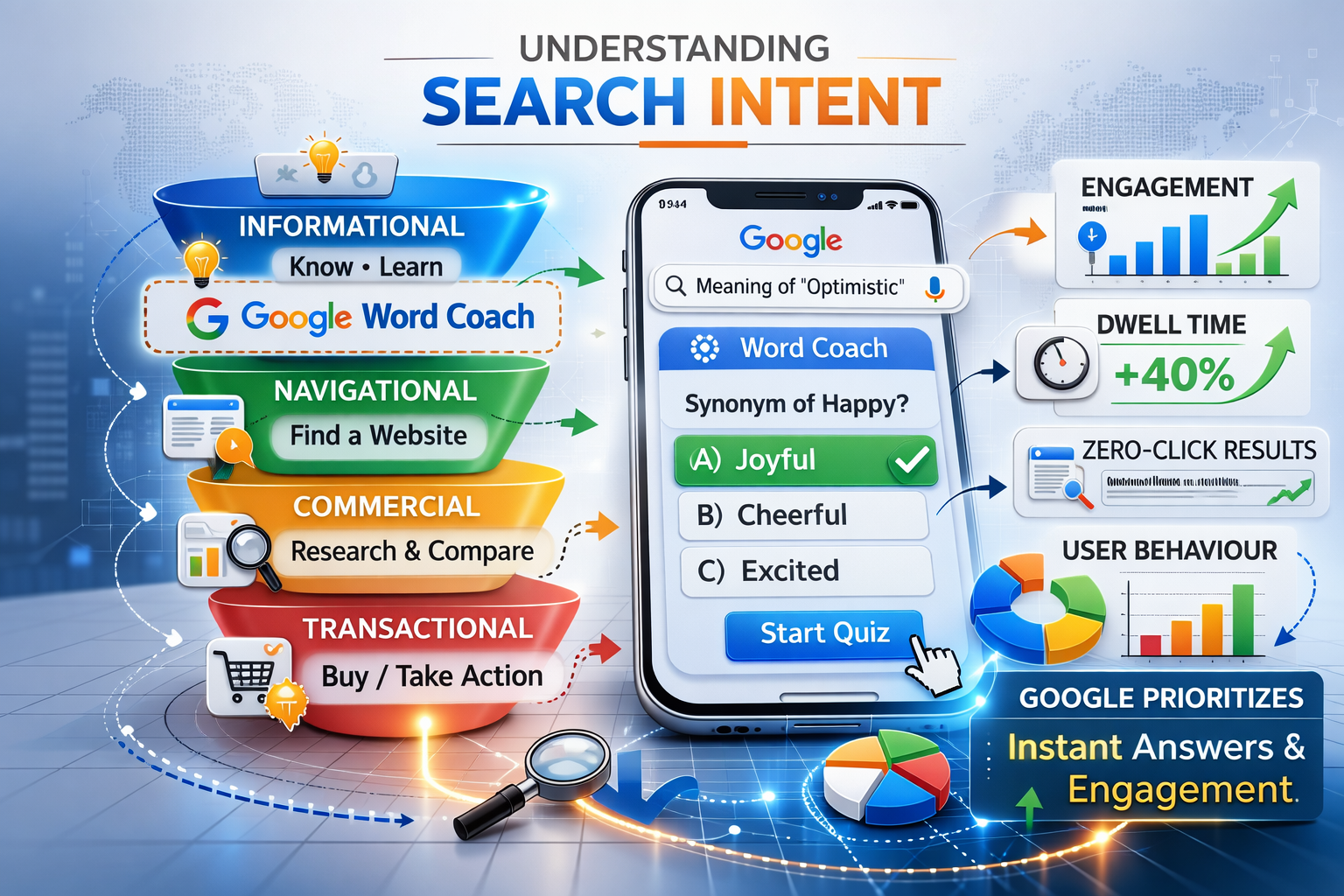
To understand Google Word Coach, we must understand search intent.
Search intent refers to the reason behind a user’s query. When someone searches for:
Google identifies informational intent. Instead of ranking only blog posts, Google Word Coach appears to immediately satisfy that intent.
This shows us that:
✔ Google prioritizes immediate answers
✔ Google rewards engagement-based experiences
✔ Google enhances informational search results with interactive tools
Google Word Coach is not just a vocabulary feature — it’s a live example of how Google adapts search results to user behaviour.
For businesses and SEO agencies like PandaCore, Google Word Coach offers valuable lessons:
Google Word Coach doesn’t exist because of keyword volume alone. It exists because Google understands intent. Businesses should optimize content around why users search — not just what they search.
Google Word Coach increases interaction. More clicks, more selections, more time spent. Similarly, websites that increase engagement signals — time on page, interactions, scroll depth — often perform better in organic search.
Google Word Coach contributes to zero-click searches, where users get answers without leaving Google. This means businesses must optimise for:
SEO is no longer just about ranking — it’s about visibility within Google’s ecosystem.
While tools like Google Word Coach highlight how Google understands search behaviour, businesses need to go beyond observation and implement strategic SEO to stay competitive.
A structured, intent-driven SEO approach offers clear advantages:
This is where most businesses fall behind — and where a strategic SEO partner makes the real difference.
Understanding Google is one thing — applying it strategically is what drives results.
At PandaCore, we help businesses across Gold Coast and Brisbane build SEO systems focused on:
✔ Search intent optimisation
✔ Engagement-driven content
✔ High-converting organic traffic
Explore our Organic SEO Services and start generating qualified leads today!
Google Word Coach also highlights Google’s focus on micro-interactions. By gamifying vocabulary learning, Google makes search interactive and habit-forming.
For businesses, this means:
If Google Word Coach can retain users inside search, your website must provide enough value to compete for attention.
While Google Word Coach itself may not drive commercial traffic, it represents a broader SEO shift:
Understanding Google Word Coach helps businesses understand how Google evolves. And when you understand how Google thinks, you can align your SEO strategy accordingly.
Google Word Coach may appear to be a simple vocabulary quiz, but it reflects deeper search engine trends. From intent matching to engagement optimisation, Google Word Coach shows how Google continuously improves the user experience.
For businesses in competitive markets like the Gold Coast and Brisbane, understanding search behaviour isn’t optional — it’s essential.
If you want to align your SEO strategy with how Google truly works, PandaCore builds structured Organic SEO systems designed around intent, authority, and measurable growth.