Introduction
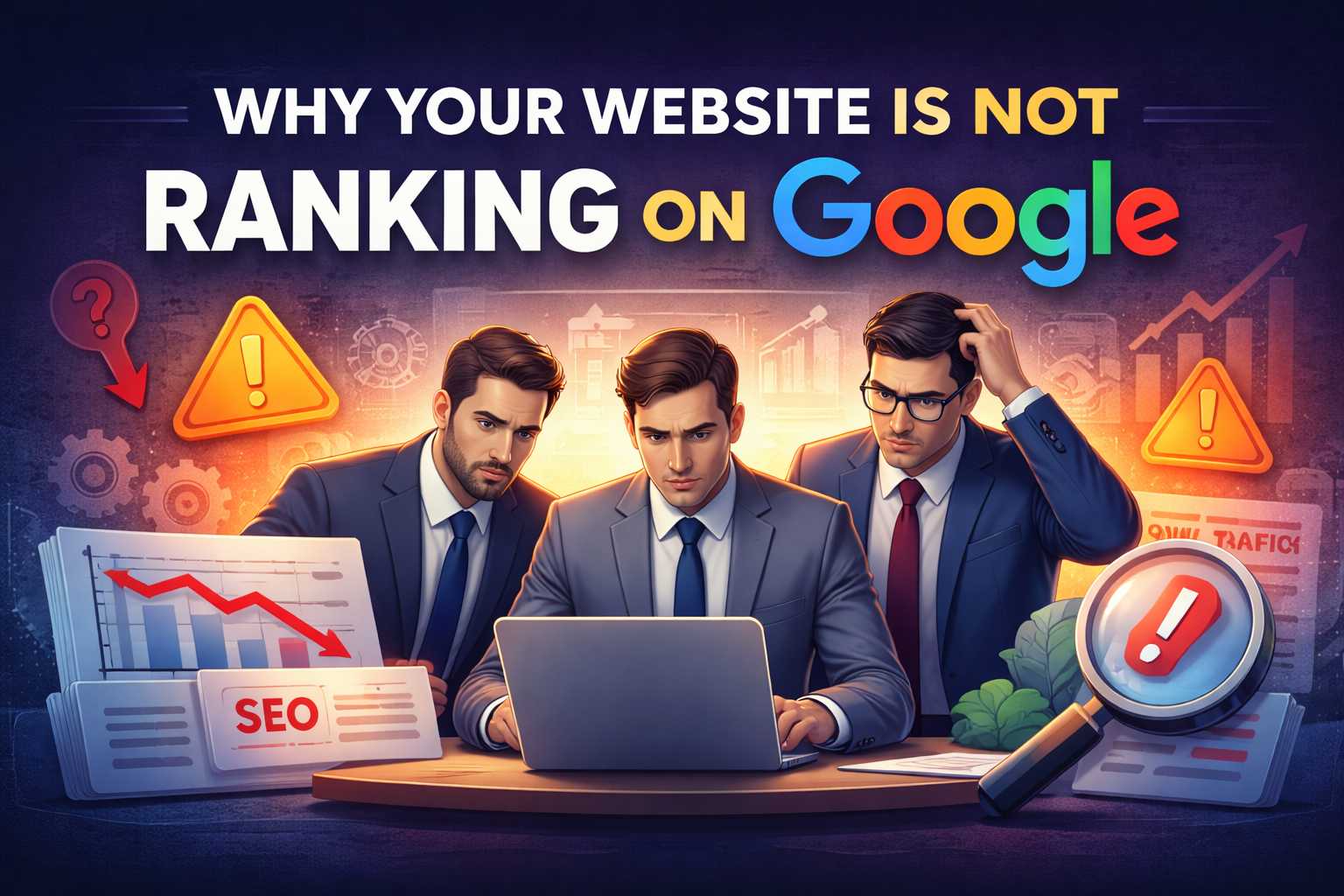
You’ve built a website, added content, maybe even targeted keywords — but your website still isn’t ranking on Google. This is one of the most common challenges businesses face in digital marketing.
If your website is not ranking on Google, it’s usually not because of one issue — it’s a combination of gaps in strategy, content, and optimization.
In this guide, we’ll break down the real reasons why your website isn’t ranking and what you can do to fix it.
1. You’re Targeting the Wrong Keywords
One of the biggest mistakes is targeting keywords that don’t align with your business or user intent.
Many websites either:
- Target highly competitive keywords with no authority
- Choose keywords with no search demand
- Ignore user intent behind the keyword
For example, ranking for a broad keyword like “SEO” is extremely difficult, especially for new or small websites. Instead, focusing on long-tail, intent-driven keywords delivers better results.
The fix: Choose keywords based on relevance, intent, and realistic competition.
2. Your Content Doesn’t Match Search Intent
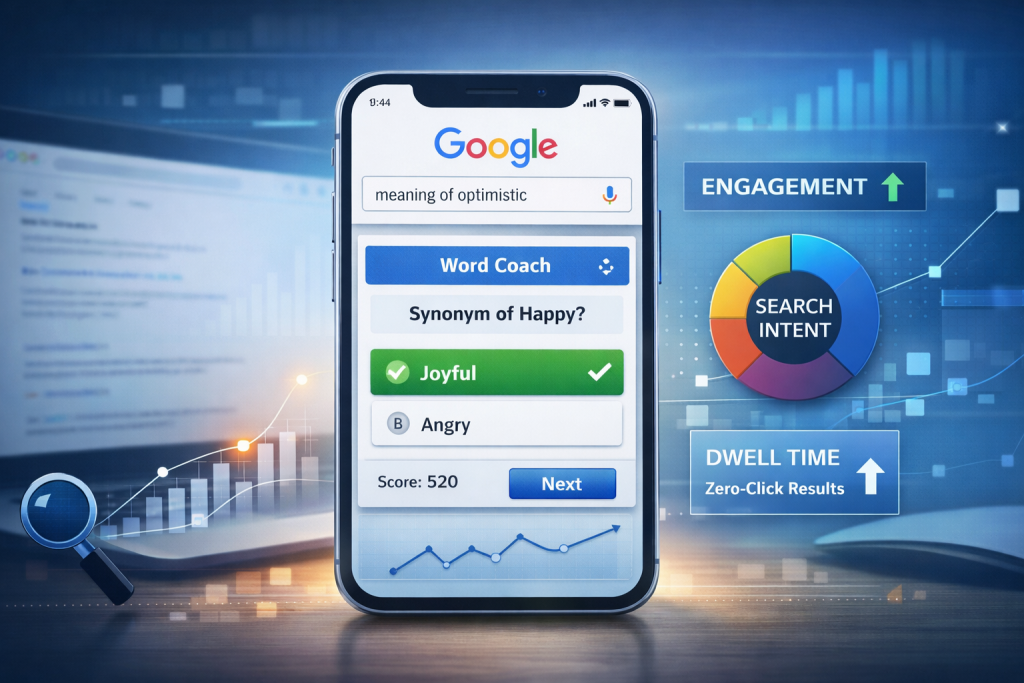
Even if you target the right keyword, your content won’t rank if it doesn’t match what users are actually looking for.
Google prioritises content that directly satisfies search intent. If users expect a guide and you provide a sales page, your rankings will struggle.
Strong content should:
- Answer the user’s query clearly
- Provide real value and depth
- Be structured for easy readability
Key insight: Ranking is not about keywords — it’s about solving user problems.
3. Your Website Lacks High-Quality Content
Thin or low-quality content is one of the most common reasons for poor rankings.
If your content:
- Lacks depth
- Repeats generic information
- Doesn’t provide unique value
…it won’t compete with high-authority websites.
Google rewards content that demonstrates expertise, relevance, and usefulness.
The fix: Create content that is detailed, informative, and aligned with user intent.
4. Weak Website Authority & Backlinks
Backlinks are one of the strongest ranking factors. If your website has little or no authority, it will struggle to rank — even with good content.
Search engines see backlinks as trust signals. The more high-quality, relevant links you have, the more credible your website appears.
Common issues include:
- No backlink strategy
- Low-quality or spammy links
- Lack of brand mentions
The fix: Focus on building high-quality backlinks through content, outreach, and authority building.
5. Technical SEO Issues
Even great content won’t rank if your website has technical problems.
Some common technical SEO issues include:
- Slow loading speed
- Poor mobile usability
- Broken links or crawl errors
- Improper indexing
These issues prevent search engines from properly accessing and ranking your website.
The fix: Regularly audit your website and resolve technical issues that impact performance.
6. Poor User Experience (UX)
Google pays close attention to how users interact with your website. If visitors leave quickly or don’t engage, it signals that your content isn’t valuable.
Poor UX often comes from:
- Confusing navigation
- Cluttered design
- Slow page speed
- Lack of clear call-to-action
A good user experience keeps visitors engaged and encourages them to explore further.
7. You Don’t Have a Consistent SEO Strategy
SEO is not a one-time task — it’s an ongoing process. Many websites fail because they lack consistency.
Without a structured approach:
- Content becomes random
- Keywords are not aligned
- Results are inconsistent
Successful SEO requires continuous optimisation, monitoring, and improvement.
The fix: Build a long-term SEO strategy focused on growth, not quick wins.
8. Your Website is New
If your website is relatively new, it may take time to rank. Google needs to:
- Crawl your site
- Understand your content
- Build trust over time
This is completely normal.
Key point: SEO is a long-term investment, not an instant result.
9. You’re Competing with Stronger Websites
In competitive industries, you’re often competing against established websites with:
- High domain authority
- Strong backlink profiles
- Large content libraries
Outranking them requires a smarter, more strategic approach.
- Niche keywords
- Content depth
- Authority building
Key Signs Your Website Has SEO Issues
If your website is not ranking on Google, you may notice:
- Low or no organic traffic
- Pages not appearing in search results
- High bounce rates
- Low engagement
These are clear indicators that your SEO strategy needs improvement.
How to Fix Ranking Issues and Improve SEO
Improving your rankings requires a structured and consistent approach.
Start by:
- Conducting proper keyword research
- Aligning content with search intent
- Improving content quality
- Fixing technical SEO issues
- Building backlinks
- Enhancing user experience
When all these elements work together, your website becomes stronger and more competitive in search results.
How PandaCore Helps You Rank on Google
At PandaCore, we don’t rely on guesswork or shortcuts. We build structured SEO systems designed for long-term success.
Our approach focuses on:
- Search Intent Optimization
Creating content that matches what users are actually searching for - Content Strategy Development
Building high-quality, authority-driven content - Technical SEO Excellence
Ensuring your website performs at its best - Conversion-Focused Traffic
Driving visitors who turn into leads and customers
We help businesses turn underperforming websites into high-ranking, revenue-generating assets.
Frequently Asked Questions (FAQs)
Conclusion
If your website is not ranking on Google, it’s not a dead end — it’s a signal that your strategy needs improvement.
Modern SEO is about more than keywords. It’s about understanding users, delivering value, and building authority over time.
Businesses that focus on the right fundamentals — content, intent, authority, and user experience — are the ones that achieve sustainable rankings and long-term growth.